Jojoba oil is a liquid wax extracted from the Jojoba shrub, it’s not a triglyceride oil.
This oil is packed with nutrients and has several health benefits, especially cold-pressed oil.
It’s a common ingredient in cosmetic products, usually skincare products and hair cream.
Why do people use Jojoba oil for their face?
Jojoba oil’s chemical structure is similar to the natural sebum oil found in human skin, thus, it’s well-suited for skin nourishment and treatment.
When applied to skin, it hydrates it and forms a light protective barrier. Not only that, it has Vitamin E, long-chain wax esters, anti-inflammatory and antioxidant properties, and protects skin against skin problems.
Women are fond of using jojoba oil to moisturise their skin, soothe irritation, and support the skin healing process.
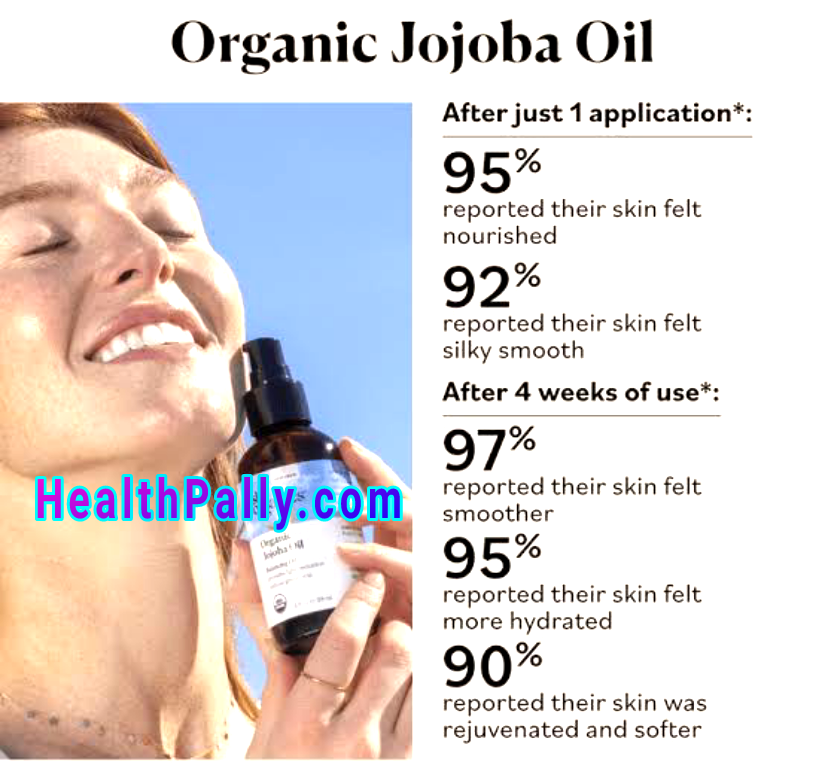
Organic (cold-pressed) jojoba vs refined/inorganic – which is better for my face?
Cold-pressed Jojoba oil, often regarded as organic or virgin in skincare products, retains more antioxidants, anti-inflammatory agents, and other micronutrients, thus has higher nutritional value than inorganic oil.
Refined jojoba has been processed to remove colour, natural odour, so it’s lighter, cleaner, and has a longer shelf life but fewer active minor compounds.
Since your priority is maximising the nutrients for your skincare, it’s advisable to choose the cold-pressed or organic jojoba oil.
Nevertheless, you can use the refined oil, and get positive results.
Is it ok to use jojoba oil on my face every day?
No, it can clog your facial pores. You can use it every other day or 3 times weekly.
I apply a few drops of jojoba oil on my face at night as part of my skincare routine to hydrate and repair my skin from sun damage.
Many people use jojoba 1-2 times daily too depending on their skin type.
Here’s what I normally recommend to people when they ask about the suitability of Jojoba oil for their skin type.
If you have normal or dry skin, you can use it twice a day – morning and night, and for oily skin, use sparingly.
For daylight application, make sure you use sunscreen as well.
How many drops of Jojoba oil should I use on my face?
For application on the face, many dermatologists and skin-care experts advise using 2-3 drops.
This amount provides enough moisture to the face without the heaviness – the excess greasiness.
I normally use 1 to 2 drops of jojoba oil, but layering my face with a moisturiser works best for me.
In summer, I use 2-3 drops when my skin has become dry.
What’s the best way to apply jojoba oil on your face?
First, wash your hands and face with soap, tap dry them with a towel, and use a cleanser to clean them properly.
When your skin is slightly damp, not dripping, apply 2-3 drops of Jojoba oil onto your palms, rub it in your palms and gently pat it onto your cheeks, forehead, chin and neck, no vigorous rub pls, just massage.
If you want to use serums, apply jojoba oil after applying lighter serums.
Can you leave jojoba oil on the face overnight?
Yes, leaving a few drops of jojoba oil on your face overnight is good and safe for many people.
If you still want to apply your night facial cream, you can as well do that, but lightweight night cream.
Leaving the oil on your face overnight helps reduce transepidermal water loss.
Do dermatologists recommend Jojoba oil for facial treatment?
Jojoba oil is a gentle, and non-irritating moisturiser, therefore, dermatologists recommend it for facial treatment.
However, you might have to consult your dermatologist to know if it’s suitable for your skin condition.
For example, those who have skin acne, or sensitive skin can have a skin breakout after application.
If you wear heavy layers or have pillowcase transfer issues, it’s better to use 1 or 2 drops only, and combine with a light moisturiser.
You can patch-test if you’re using it for the first time, especially if you have sensitive skin, skin allergies, inflamed skin, eczema flare, acne, rosacea, and other skin problems.
Does jojoba oil clog facial pores or cause acne?
Yes, it can clog your pores. Jojoba oil has a low comedogenic rating, about 0-2 depending on the shrub, and oil quality.
It can help regulate oil production in some individuals, reduce breakouts, and sometimes exacerbate comedones if your skin is prone to acne.
Will jojoba oil help with wrinkles and skin ageing?
Jojoba’s moisturising and antioxidant actions can improve skin plumpness and short-term suppleness, which visually softens fine lines.
There is limited research on wrinkle reversal, but it can prevent quick ageing.
How long does it take to see results from Jojoba oil?
It takes between 1-3 weeks to see results. You can expect to see improved hydration, changes in collagen-driven structure, and a smoother appearance.
You can use Jojoba oil as part of your anti-ageing regimen since it has hydrating agents.
Does jojoba oil lighten/whiten facial skin or reduce pigmentation?
No, Jojoba oil can not whiten or tone your skin but it can reduce inflammation and improve overall skin health.
Yes, this can make post-inflammatory hyperpigmentation fade more evenly over time, but it’s not a bleaching agent.
How and when should I wash the oil off my face?
If you apply jojoba oil on your face in the morning, use sunscreen, and you’re good to go.
If you use it as a cleansing oil overnight, wash the residue off in the morning or simply take your usual bath.
If you feel your pores are clogged or your face is sticky, use an oil-based cleanser, and again a water-based cleanser the next morning.
Can I mix jojoba oil with serums, retinoids, or other products?
Jojoba mixes well with most humectants and serums (vitamin C, hyaluronic acid) as a final sealing layer.
If you use prescription retinoids, apply the retinoid as directed, usually to clean, and dry your skin, and apply jojoba oil afterwards.
Jojoba is mild and non-reactive, therefore, it rarely interferes with other skincare solutions, but mind using it with strong exfoliating acids or retinoids to avoid irritation.
What to look for when buying Jojoba oil?
I prefer cold-pressed oil, which is hexane-free, and has high nutritional value.
Look for transparent sourcing and dark glass bottles which protect oil from light.
Check the ingredient list before you buy. Go for pure jojoba seed oil with no added fragrances or fillers.
Avoid products labelled with a long list of essential oils if you’ve sensitive skin.

A nutritionist, fitness trainer, and public health administrator who has dedicated more than two decades to promoting healthy eating, preventive care, and sustainable lifestyle habits.
With years of experience in community health, clinical research, and wellness program development, focused on natural approaches to nutrition and disease prevention.
Driven by the belief that wellness begins with education and daily habits, at HealthPally, I’ll continue to advocate for practical ways people can live better, healthier lives.